
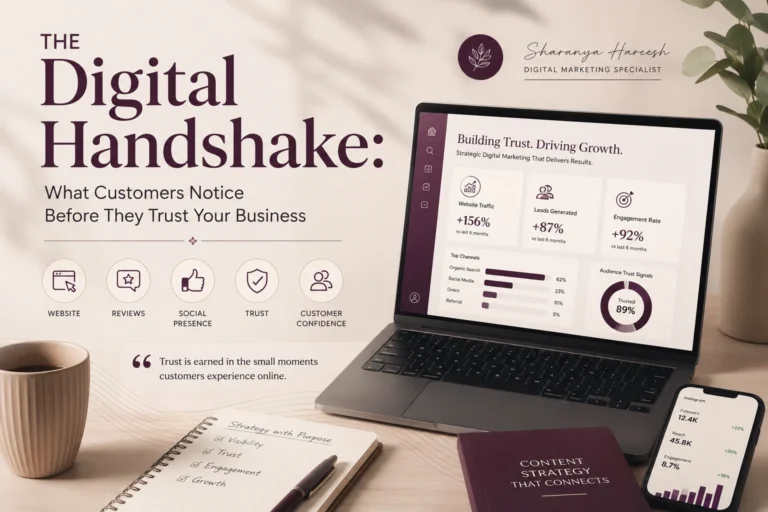
Trust isn’t built when someone contacts your business. It begins the moment they discover you online.
Imagine meeting someone for the first time. Before a single word is exchanged, you’ve already formed an impression based on appearance, confidence, and body language.
The same thing happens online.
Before a customer calls, sends a message, or makes a purchase, they’re silently evaluating your business. This first interaction is your digital handshake—and it often determines whether they stay or leave.
In today’s digital world, trust is built long before a conversation begins.
What Is a Digital Handshake?
A digital handshake is the first impression your business creates across its online presence. It includes every touchpoint a potential customer encounters, from your website and social media profiles to reviews and search results.
1.Your Website: The First Sign of Professionalism
When visitors land on your website, they immediately ask themselves:
- Does this business look credible?
- Is the website easy to navigate?
- Can I quickly find what I’m looking for?
A clean, modern website sends a powerful message: your business is active, professional, and invested in its customers.
On the other hand, broken links, outdated information, or a cluttered design can create doubt—even if your products or services are excellent. These can also be signs your website is losing customers
Ask Yourself:
- Is my website mobile-friendly?
- Does it load quickly?
- Is my contact information easy to find?
2.Reviews: The Digital Word-of-Mouth
Before trusting a business, many customers look for proof that others have had a positive experience.
Online reviews often influence purchasing decisions more than advertisements.
Positive reviews demonstrate:
- Reliability
- Customer satisfaction
- Consistency
Even a few genuine reviews can help reassure potential customers that they’re making the right choice. For local businesses, an optimized Google Business Profile can also make reviews and essential business information easier for potential customers to find.
3.Social Media Presence: Proof That You’re Active
Many customers visit social media profiles before making contact.
They aren’t necessarily looking for viral content. They’re looking for signs that your business is active and engaged.
An updated social media presence shows:
- Recent activity
- Industry expertise
- Customer interaction
- Brand personality
A profile that hasn’t been updated in months may unintentionally signal that the business is inactive.
4. Consistent Branding Builds Recognition
Imagine seeing a different logo, color scheme, or business description on every platform.
It creates confusion.
Consistent branding across your website, social media, and marketing materials helps customers recognize and remember your business.
Consistency communicates professionalism and attention to detail—two qualities that contribute to trust.
5. Clear Contact Information Creates Confidence
Customers want reassurance that a real business exists behind the screen.
Make it easy for visitors to find:
- Phone number
- Email address
- Business location (if applicable)
- Contact form
When contact information is visible and accessible, customers feel more comfortable reaching out.
6. Valuable Content Demonstrates Expertise
Helpful content is one of the most effective ways to build trust online.
Whether it’s a blog post, social media tip, or educational guide, useful content shows that you understand your audience’s challenges and are willing to provide value before asking for anything in return.
People trust businesses that educate, not just promote.
The Trust Test
Take a moment to view your business from a customer’s perspective.
Ask yourself:
- Website: Does it look professional and trustworthy?
- Reviews: Are they visible and recent?
- Social media: Is your business active and engaging?
- Branding: Does it look consistent across platforms?
- Contact: Can visitors reach you easily?
- Content: Does it provide genuine value to your audience?
Further Reading
Google Search Central – Creating Helpful, Reliable, People-First Content
Google Business Profile – Tips to Get More Google Reviews
Nielsen Norman Group – The Aesthetic-Usability Effect
Final Thoughts
Trust is rarely built through a single advertisement or sales message.
It’s built through a series of small signals that tell customers your business is credible, professional, and reliable.
Every search result, website visit, review, and social media interaction contributes to that first impression.
Because in the digital world, your customers often decide whether to trust your business before they ever say hello.
About the Author
Hi, I’m Sharanya Hareesh, a freelance digital marketing expert in Abu Dhabi helping businesses strengthen their online presence through SEO, social media marketing, content strategy, and web development.

